
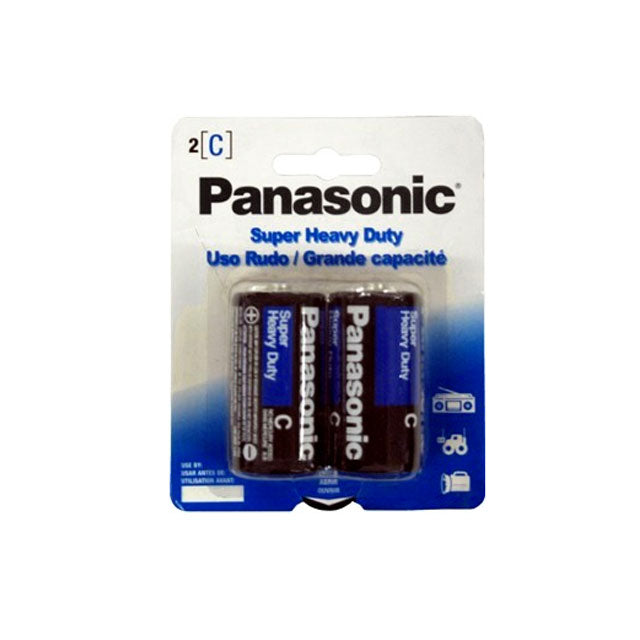
Panasonic C-2 Super Heavy Duty Batteries
When you need consistent performance for everyday gadgets, the Panasonic C-2 Super Heavy Duty Batteries step up. This pack of two C-size carbon-zinc cells delivers a steady 1.5 volts, making them a go-to for toys, flashlights, and novelty electronics. Built to Panasonic’s trusted standards, these batteries resist leakage and hold their charge over years of storage.
PRODUCT OVERVIEW
As part of the heavy duty family, these carbon-zinc batteries provide economical, single-use power for low-drain devices. The chemistry is optimized for intermittent use, ensuring reliability in items that don’t require high current bursts. Each cell weighs approximately 66 grams and measures 50 mm in length by 26.2 mm in diameter, conforming to standard C battery dimensions for universal compatibility.
KEY SPECIFICATIONS
| Model | Panasonic C-2 Super Heavy Duty Batteries |
| Quantity | 2 batteries |
| Size | C |
| Chemistry | Carbon-Zinc (Heavy Duty) |
| Voltage | 1.5V per cell |
| Shelf Life | Up to 5 years when stored properly |
| Dimensions | Approx. 50 mm (L) x 26.2 mm (D) |
| Weight | ~66 g each |
IDEAL APPLICATIONS
The Panasonic C-2 Super Heavy Duty Batteries are perfectly matched for low- to moderate-energy devices. Common uses include:
- Remote controls for TV, audio systems, and streaming sticks
- Wall clocks and alarm clocks
- LED flashlights and camping lanterns
- Portable AM/FM radios
- Novelty electronics, light-up toys, and holiday decorations
- Doorbells and wireless door chimes
- Smoke detectors (check manufacturer recommendation)
SHELF LIFE & STORAGE
With a 5-year shelf life from date of manufacture, these batteries are an excellent addition to any emergency preparedness kit. Store them in a cool, dry place at room temperature. Avoid exposing cells to extreme heat or moisture. Proper storage ensures they are ready whenever you need replacement power for your most-used gadgets.
SAFETY NOTES
- Do not recharge, disassemble, or incinerate.
- Keep away from children and pets. Ingestion can be harmful.
- Insert with correct polarity (+/-) to prevent damage.
- Remove exhausted batteries from devices to avoid leakage.
- Dispose of used batteries according to local regulations.

